Online
Nervous System Regulation Course
A live 6-session online course designed to help you reduce anxiety, manage overwhelm, quiet overthinking, and build emotional resilience.

Somatic therapy, EMDR, and nervous system regulation to help you work through life’s challenges—at a pace that respects your needs.
In person on the Danforth · Online across Ontario

Online
A live 6-session online course designed to help you reduce anxiety, manage overwhelm, quiet overthinking, and build emotional resilience.
Does this sound familiar?
You may understand why you feel anxious or overwhelmed, yet still find yourself tense, exhausted, caught in overthinking or disconnected from the present.
Tired during the day, but your mind keeps replaying conversations when you try to sleep.
Emails, decisions and conversations get second-guessed long after they are over.
Your shoulders, jaw, chest or stomach tighten before you consciously feel worried.
A traumatic memory, loss or relationship experience still affects how safe you feel.
You care for others, say yes too often and leave little room for your own needs.
You feel disconnected from yourself, or your body stays alert even when nothing is happening.
Whatever brings you here, we begin by understanding how it is affecting your mind, body, and relationships, then choose an approach that fits your needs, readiness, and goals.

Notice stress signals earlier and practise ways to ease tension, reconnect with yourself and feel grounded.

Process distressing memories and the reactions that continue to affect you today.

Helps reduce chronic overwhelm, anxiety, shutdown, and protective survival patterns so you can feel calmer, safer, and more connected in daily life.

Support for the strain of caring for others, repeated exposure to distress and difficulty switching off.
Founder and Clinical Director· Registered Psychotherapist
I help people work through anxiety and trauma with a compassionate, body-based and evidence-informed approach, so they can feel calmer, more resilient, and more like themselves again.
Meet LeaThe SHINE Framework
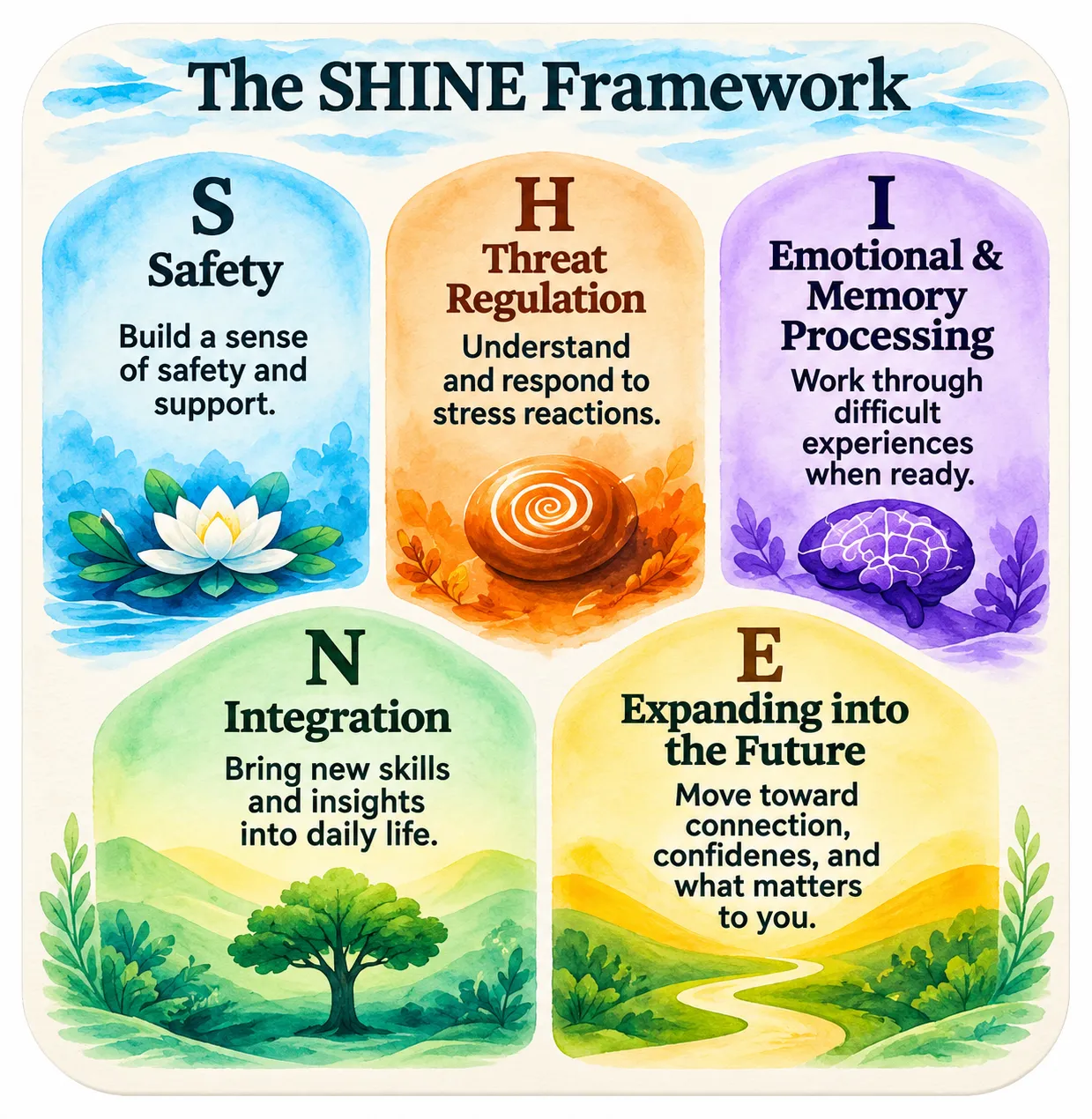
Developed by Lea Konforte, SHINE brings together nervous system regulation, emotional and memory processing, and personal growth. It guides how we choose approaches that fit your needs, readiness, and goals.
We move between these areas together, guided by your needs, readiness, and goals.
From first call to feeling steadier
A short video call to talk about what’s going on and ask questions. No pressure.
Together, we explore what brings you to therapy, how it affects your thoughts, emotions, body and daily life, and what you would like to feel different. We move at a pace that feels safe.
You leave with one or two practices to continue during your week, based on what we’re working on together.
We review your progress against your goals, so therapy stays useful and purposeful.

The free 15-minute consultation is an opportunity to briefly discuss what brings you to therapy, ask questions about our approach, and consider whether working together feels like a good fit. We can explain practical next steps and discuss which services may suit your needs. It is not a full therapy session or a formal assessment.
Somatic therapy can be offered online, using guided awareness, grounding, movement, and nervous system regulation practices adapted to your setting. EMDR can also be provided remotely when clinically appropriate, with a suitable method of bilateral stimulation, privacy, and a plan for managing distress. We will discuss whether online treatment is a good fit for your needs and circumstances.
Not necessarily. Different therapeutic approaches involve different levels of discussion, and you can work collaboratively with your therapist to decide what feels manageable. EMDR, the Flash Technique, and clinical hypnotherapy may allow work with distressing experiences without a detailed verbal account, although some discussion and assessment are still important. We begin by exploring what helps you feel supported and what you are ready to address.
Traditional talk therapy often emphasizes exploring thoughts, emotions, experiences, and behavioural patterns through conversation. Our integrative approach also considers how stress and trauma can affect the body, nervous system, emotional responses, and learned patterns that may operate outside conscious awareness.
We may incorporate somatic therapy, nervous system regulation, EMDR, and Flash Technique to help you work with these responses and process distressing memories. Conversation remains an important part of therapy, but we can also draw on approaches that go beyond talking alone, depending on your needs, goals, and preferences.
You do not need to decide on a therapy method before booking. We begin by understanding your concerns, goals, preferences, and relevant history. Together we can discuss whether somatic therapy, nervous system regulation, EMDR, or another approach may be appropriate, and adapt the plan as therapy progresses.
The number of sessions varies depending on your goals, the complexity of your concerns, and your progress. Some people benefit from short-term therapy, while others need longer-term support. Like learning to swim or cook, therapy is most effective when you attend regularly and practise what you learn between sessions. We generally recommend starting with weekly sessions to build momentum and reinforce new skills. As you progress, we will reassess your needs together and may transition to biweekly or less frequent sessions. Our goal is to help you create meaningful, lasting change and develop the confidence to maintain your progress independently.
Free resources
Practical guides and self-paced courses for a calmer, more connected life.
Short, practical resources you can follow at your own pace.

Practise simple tools for steadier days.

Build a kinder relationship with yourself.

Explore patterns, boundaries and connection.
Practical perspectives on anxiety, trauma, and the nervous system.

How much does trauma therapy cost in Toronto? A gentle walk through what to expect, so you can find support that fits your needs and your budget.

Holistic mental health care nurtures mind, body and spirit together: a path to healing beyond talking, for anxiety, grief, trauma and fertility challenges.

Struggling with chronic muscle tension or muscle guarding? How nervous system regulation and somatic therapy can help release tension and restore inner calm.